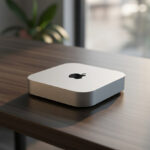
If you’re building a home server and care about low power, quiet operation, and efficiency, the Mac mini with Apple Silicon is hard to beat. Unlike traditional desktops or rack servers, the Mac mini combines desktop-class performance with tiny idle power draw, making it ideal for 24/7 use at home.
Most home servers spend the majority of their time lightly loaded, running background services like Docker containers, DNS filtering, monitoring, media streaming, and automated backups. That means idle power consumption is more important than peak performance, and this is where Apple Silicon shines.
Power Consumption Comparison
| Server Type | Idle | Under Load |
|---|---|---|
| Mac mini (Apple Silicon) | 6–8W | 35–45W |
| Mini PC (Intel/AMD) | 8–15W | 40–65W |
| Desktop PC | 40–70W | 200–400W |
| Rack Server | 90–150W | 300–800+W |
While peak draw is important, the key difference-maker here is the idle power draw.
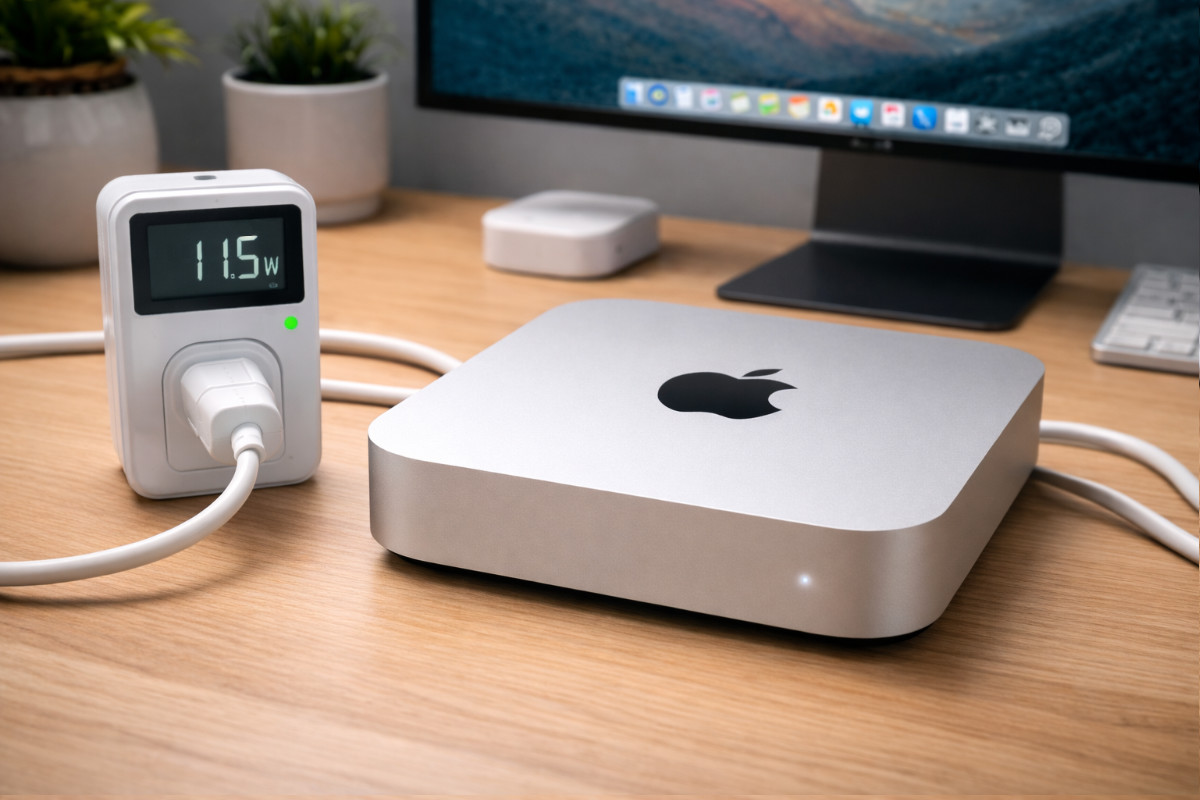
Most home servers spend the vast majority of their time sitting at low utilization. Even with multiple services running, CPU usage typically hovers near idle. That’s where Apple Silicon’s efficiency cores and unified architecture shine. A Mac mini can sit comfortably around 6–8 watts while still handling background tasks, containers, and light media serving.
Traditional desktop PCs and rack servers were never designed for low idle draw. They’re built for sustained performance and expandability, not 24/7 efficiency. That overhead adds up quickly when the machine never turns off.
Electricity Cost Comparison
Using average power draw for typical home usage and an estimated U.S. electricity rate of $0.15 per kWh:
| Server Type | Power Draw | Cost |
|---|---|---|
| Mac mini (8W average) | ~70 kWh / year | ~$10.50 / year |
| Mini PC (12W average) | ~105 kWh / year | ~$15.75 / year |
| Desktop PC (80W average) | ~700 kWh / year | ~$105 / year |
| Rack Server (120W average) | ~1,050 kWh / year | ~$158 / year |
Over several years, the gap becomes significant. A rack server can cost more in electricity than the price difference between the machines themselves.
Why the Mac mini Is the Best Low-Power Home Server
For typical home server workloads — media streaming, containers, home automation, monitoring, and backups — the Mac mini delivers one of the best efficiency profiles available. It stays cool, nearly silent, and dramatically lower in power consumption than traditional server hardware. For these reasons, the Mac mini is one of the most power-efficient and practical home server options in 2026.
Leave a Reply